Showing posts with label Jane Magazine. Show all posts

Monday, September 24, 2007

Magazines Get a Myspace

Photo Sharing and Video Hosting at Photobucket

Magazines are now promoting their publications on Myspace, a virtual social networking website. The Magazine Publishers of America (MPA) has issued a list of 49 publications that have their own profile on Myspace in order to engage readers to get a copy of the magazine or to visit the official pages of the magazine’s website.


Most magazine Myspace profile pages have an up to date blog, links to quizzes, surveys and links to the online edition of the magazine.


Cosmopolitan magazine has daily advice tips and information on how to enter to win a fashion trip to New York. Bulletins are sent out to virtual friends keeping them up to date on content in the latest issue of Cosmo as well as how to receive the newsletter or how to get a subscription.


Jane magazine’s Myspace profile asks readers for feedback on content in the magazine and ask to write a comment directly on the Myspace page. The Myspace page also gives a list of favorites to anyone that wants a good book recommendation or movie to watch.


Online magazines, especially teen publications have seen a decline in online readership with the Myspace generation. Magazine sites such as TeenPeople.com, which has folded both their print and online publications, could not compete with the online traffic that social networking sites have seen. Instead of becoming a competitor to the online social network, some magazines have decided to get on board and use Myspace for their own gain.


Not a week goes by when Myspace isn’t in the news, announcing a business deal or how a young girl was kidnapped and killed from someone she met on Myspace. Whether it is positive or negative, the attention introduced today’s generation to customize their own profile and add friends to their Myspace page. Today, everyone wants to be a part of the Myspace phenomenon.


Myspace started as a way for amateur bands to get noticed. The virtual social network aimed to defy big business in order to allow the underdogs to be heard. Their approach was one that allowed people to say whatever they wanted without censorship, which allowed the web network to surpass Friendster and Facebook in popularity.


The magazine industry is in constant change with the rapid technology that becomes available. In order to sustain success for the print or online publications, they must take advantage of other ways to encourage people to continue to read their publications.

Monday, September 10, 2007

Jane Magazine Folds: Who Cares?

In July, publishing giant Condé Nast announced it was folding Jane magazine after 10 years of production, for financial reasons. The final issue hit the racks last month, leaving a slew of 19-34 year old women who identified with its irreverent style devastated.

Borne out of Jane Pratt's Sassy magazine, which folded in 1994, Jane offered readers an edgy -- and at times sarcastic -- approach to a women's magazine, running articles such as Katy McColl's "Young, hot and divorced" and "If two white girls had been butchered, there would have been arrests that night."

Today, visitors to the Jane Web site, www.janemag.com, are redirected to its sister publication, Glamour, while Jane print subscribers were sent copies of either Glamour, Allure, or Lucky in an attempt to wean readers off their favorite read.

But a magazine as unique as Jane has a readership equally unique. So how do those readers feel when something they have become attached to is taken away? What fills the void? Are readers as fickle as the industry itself?

"I will miss it," said Lisa Tabet-Chavez, a former subscriber. "I liked that it was different from most of the mainstream fashion magazines. The jokes were more snarky, and the stories a bit edgier."

A reader for years, Jessica Wirth appreciated the "more interesting spins on the typical magazine topics" and the "sometimes socially or environmentally relevant exposés." But when asked if Jane was replaceable, Wirth's response was indifferent.

"It was nice while it lasted," she said. "I already subscribe to The Week, Entertainment Weekly and Ok!, so I think I'm set."

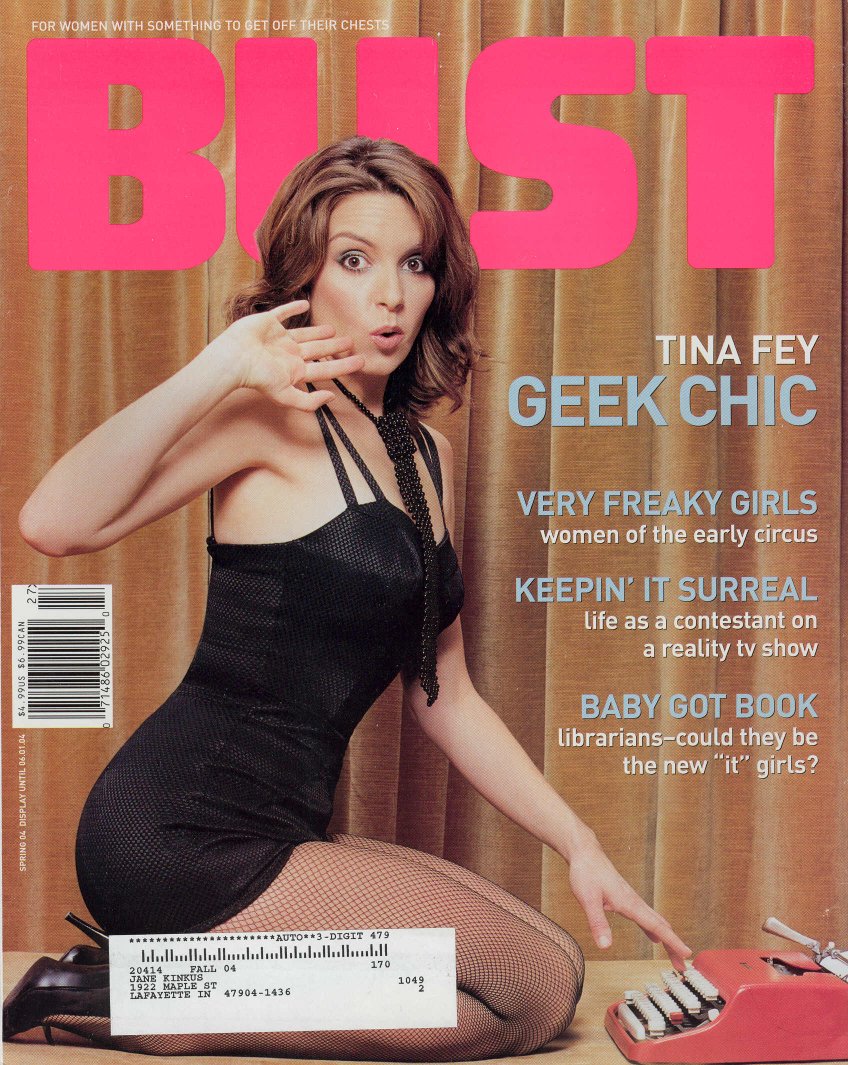
But those titles won't cut it for some former-Jane readers. Tabet-Chavez said a friend suggested Bust, which promises "an attitude that is fierce, funny, and proud to be female," while "BUSTing stereotypes about women since 1993." This month, the magazine's Web site urges visitors to "get your hands on our BUST!"

Another reader said she'll "honestly not" miss Jane, as it never really lived up to her expectations of "edgy and intelligent." Identified only as "Jen" in an anonymous email exchange, she suggested her ideal magazine doesn't yet exist.

"I will rip out the trashiest articles from Cosmo, blend it with the snarkier pieces from The Believer, and cut out pictures from Paper magazine to make my ultimate ideal rag," she said, before -- perhaps unwittingly -- exposing that very void left by Jane's demise.

"If you know of a magazine that's similar to Jane, let me know," she added.

Say 'Goodbye' to Jane Magazine


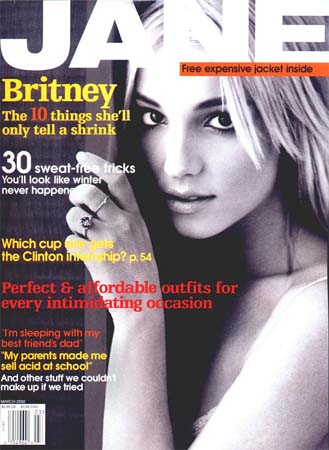
I was a subscriber to Jane magazine a mere three years out of the ten that they had been in publication. Their August of 2007 issue was their final issue and I was something short of devastated upon hearing this news. I was first attracted to Jane because of their no frills articles, covers and stories. Jane found a way, in the midst of all of the bubbly women’s magazines out there, to be more down-to-earth by mixing fashion trends with politics, world events, and real life stories. Jane barely changed in the ten years in which they were putting out magazines (with an exception to the last two years which they were working under a different editor). Their first issue made its debut in September of 1997. In the time since announcing their retirement, the cover of their first issue (displaying an ecstatic Drew Barrymore) has been posted everywhere.

When I look at the very first Jane cover I notice that their layout did not change much. That was part of what attracted me to their magazine. Their covers are not splashed with coverlines that scream “Top Ten Ways to Please Your Man” or “Fastest Weight Loss Tricks”. Instead the writers of Jane tackled just about every other topic that is or ever has been important to women. More often than not, their covers leaned more towards the plain side. Most would have a completely white background and the face of their chosen cover model, sprinkled with a few coverlines to highlight the contents of their issue. They were not covered in overdone, flashy, electric colors with a model that has an abundance of makeup and head of overdone hair. The covers were, for the most part, pretty basic.

In the years that I read Jane magazine I was introduced to the types of articles that I find most interesting. Jane would feature articles about women who survived cancer, and also those about women who lost friends to cancer. They would have articles about refugees and political movements. The most attractive thing about Jane magazine is that they had a way of touching on all of the typical articles of a woman’s magazine without being obnoxious about it, and then went the extra mile in covering more serious issues.

In addition to all of their good-doing, Jane was extremely well known for their off-beat sense of humor and quirky articles. They were anything but boring or mundane and they found a unique way of catering to and attracting an audience of readers composed of the kind of women who could not stand reading Cosmopolitan.

One of the possible reasons for the end of Jane magazine could be that it was not publicized enough. Sure, it was around for a long time so it must have had a large group of established and loyal subscribers, but for some reason it never reached the commercial height that other women’s magazines reached(magazines such as Cosmopolitan, Vogue, Allure, Glamour and Shape). In an article written by Rachel Leibrock for the Detroit Free Press, Andi Zeisler, the editorial director for the feminist magazine Bitch was quoted as saying, “A lot of readers were in the dark about Jane. It existed in a black hole between being alternative and mainstream.”

The same article also points out that Jane Pratt, the founding editor of Jane magazine, left the company in 2005. In the two years after Jane Pratt left, Jane became more commercial and slowly turned away from its original intent and direction.

According to the New York Post, “Editors at Jane magazine had to cancel a "Guide to Boobs" after asking female colleagues to anonymously bare their breasts for photographers, but then carelessly divulging their identities in a mass e-mail.”

Whatever the reason for the end of Jane magazine, on July 9th of this year Reuters announced that Conde Nast officially decided to end Jane’s ten year run. Even though I had already stopped subscribing to the magazine around the time of the editor switch in 2005, I appreciated the variety that Jane provided my eyes and mind with when I browse through the magazine rack. And I am sure I'm not alone when I say the magazine rack won't be the same without Jane.